
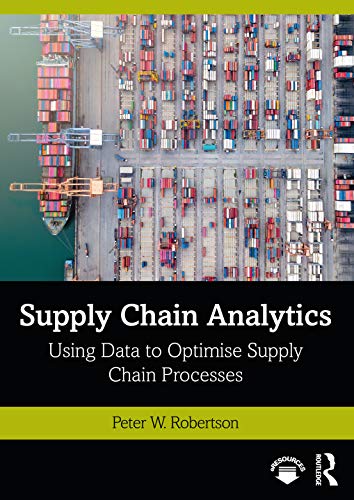
Supply chain analytics : using data to optimise supply chain processes / Peter W. Robertson.
Material type: TextPublication details: New York : Routledge ; 2021.Description: xx, 298 pages : illustration ; 22 cmISBN:
 - 9780367540067
- 9780367540043
- 658.7 ROB
| Item type | Current library | Call number | Status | Barcode | |
|---|---|---|---|---|---|
| Books | Institute of Public Enterprise, Library S Campus | 658.7 ROB (Browse shelf(Opens below)) | Available | 50536 |
Includes bibliographical references and index.
1. Introduction to Supply Chain Analytics
2. Supply Chain Analytics in Practice
3. Getting Started with Supply Chain Analytics
4. Using Supply Chain Analytics to Enhance Supply Chain Strategy Processes
5. Using Supply Chain Analytics to Enhance Supply Chain Design Processes
6. Using Supply Chain Analytics to Enhance Supply Chain Execution Processes
7. Using Supply Chain Analytics to Enhance Supply Chain People Processes
8. How to Deal Effectively with Organisational Social Issues
Supply Chain Analytics introduces the reader to data analytics and demonstrates the value of their effective use in supply chain management. By describing the key supply chain processes through worked examples, and the descriptive, predictive and prescriptive analytic methods that can be applied to bring about improvements to those processes, the book presents a more comprehensive learning experience for the reader than has been offered previously.
Key topics are addressed, including optimisation, big data, data mining and cloud computing. The author identifies four core supply chain processes – strategy, design, execution and people – to which the analytic techniques explained can be applied to ensure continuous improvement. Pedagogy to aid learning is incorporated throughout, including an opening section for each chapter explaining the learnings designed for the chapter; worked examples illustrating how each analytic technique works, how it is applied and what to be careful of; tables, diagrams and equations to help ‘visualise’ the concepts and methods covered; chapter case studies; and end-of-chapter review questions and assignment tasks.
Providing both management expertise and technical skills, which are essential to decision-makers in the supply chain, this textbook should be essential reading for advanced undergraduate and postgraduate students of supply chain analytics, supply chain leadership, and supply chain and operations management. Its practice-based and applied approach also makes it valuable for operating supply chain practitioners and those studying for professional qualifications.
Online resources include chapter-by-chapter PowerPoint slides, tutorial exercises, written assignments and a test bank of exam questions.
There are no comments on this title.
 2cqr automation private limited, Chennai. All Rights Reserved.